


DIY solar generator setups are a practical way to cut energy costs and add backup power without breaking the bank. If you want portable off-grid energy for home, camping, or emergencies, you need to know the real costs, the right steps, and what mistakes most guides ignore.
Key Takeaways
- Building a DIY solar generator in 2024 costs $200–$2,000+ depending on your needs and component choices.
- Most guides skip critical safety integration and real-world assembly challenges—so plan carefully for wiring and battery management.
- DIY builds deliver lower long-term costs but require hands-on planning—matching panels, batteries, and inverters is essential.
- The Core Concept of DIY Solar Generators
- Step-by-Step Guide: How to Build a DIY Solar Generator
- Advanced Analysis & Common Pitfalls
- Conclusion
- FAQ
The Core Concept of DIY Solar Generators
A DIY solar generator is a self-assembled portable power system using solar panels, a battery bank, and an inverter. You collect sunlight with solar panels, store electricity in batteries, and convert it to usable AC power. People build their own solar generators to save money, stay prepared for outages, and have portable energy for travel or outdoor use.
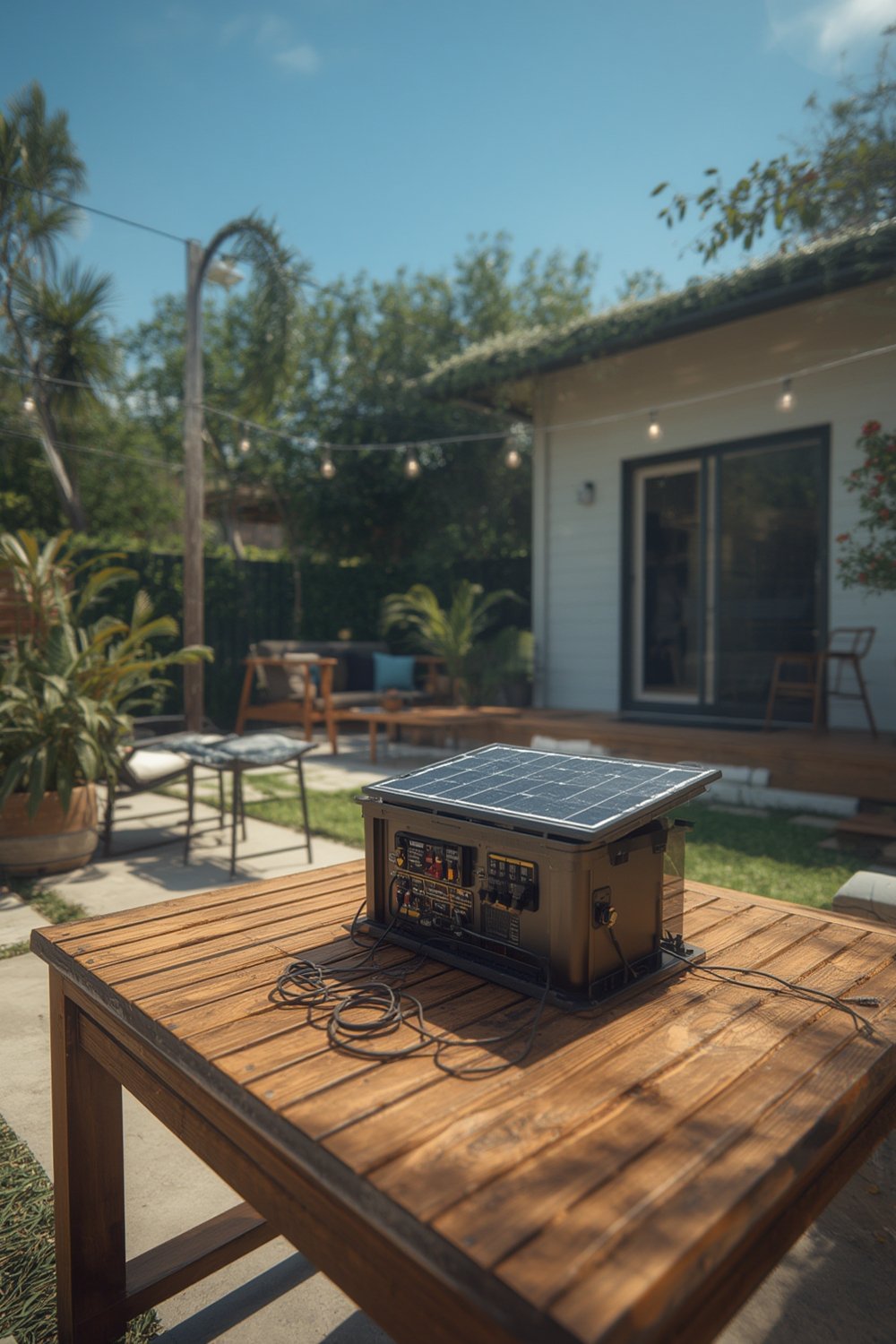
Compared to commercial solar generators, a DIY setup gives you flexibility. You choose capacity, battery type, and add-ons, keeping costs lower. In 2024, basic builds tap into high-efficiency, affordable lithium iron phosphate batteries and modular components. Most DIY builders assemble kits sized for 500Wh to 10kWh, but larger off-grid setups are possible if you plan carefully. Just keep in mind that success requires matching the right components—especially if you want reliability and long-term savings.
If you’re new to solar, you may also be interested in broader home improvement trends and rebates—these can tie into energy-saving projects.
Step-by-Step Guide: How to Build a DIY Solar Generator
- Decide Your Power Needs
- List the devices you want to power (e.g., lights, fridge, tools, CPAP, phones).
- Add up total daily watt-hours (Wh) used; for example, 5 hours of a 50W fan: 5×50=250Wh.
- Multiply by days of autonomy (for backup use).
- Choose the Battery Bank
- Lithium iron phosphate (LiFePO4) is now the DIY standard for best safety and cycle life, at around $130/kWh in bulk [source].
- Add in cost for BMS (Battery Management System), holders, wiring, and protective case.
- Select Solar Panels
- Panels come in 100W–400W sizes. More panels = faster recharge. Price is roughly $0.40–$0.50 per watt in 2024 [source].
- For true portability, use folding or suitcase panels.
- Pick the Right Inverter
- Pure sine wave inverters give safe AC power for all electronics. String inverters $1,000+, small inverters start near $100.
- Match the inverter output to your total wattage requirements, allowing a 20% margin for safety.
- Balance of System: Fuses, Wiring, Connectors
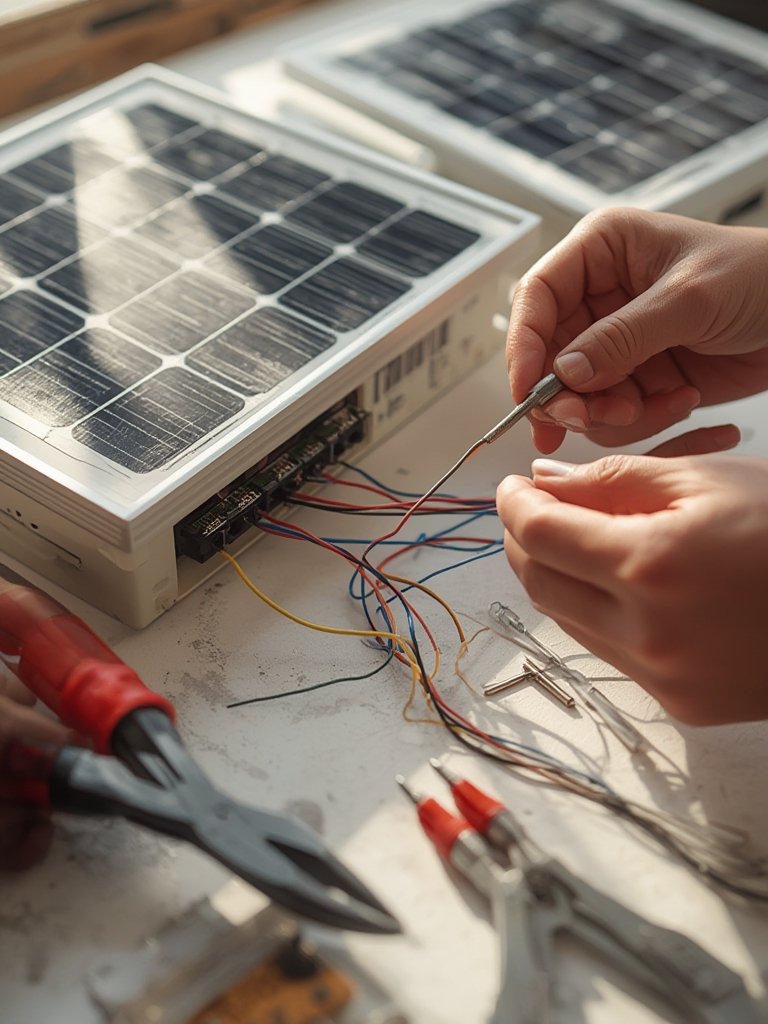
- Use MC4 solar connectors for panels, thick copper wire (AWG 10–4) for current loads.
- Install fuses/automatic breakers on all main battery and solar input/output lines for fire safety. Don’t skip this!
- Final Assembly & Safety Checks
- Lay out your system first without permanent connections.
- Double-check polarity, fuse sizing, and secure all cables.
- Test with small loads before running large appliances. Check for loose connections or overheating cables.
For more ways to stretch your budget on home upgrades and energy-saving, see our overview of heat pump water heater rebates and other cash-back options homeowners can use.
Advanced Analysis & Common Pitfalls
DIY solar generator building isn’t just plug-and-play. Here are mistakes and realism that most beginners miss, according to 2024 cost research and builder reports:
- **Wiring Errors:** Reversed polarity or skipping proper wire sizing causes shorts or dangerous overheating. Many guides gloss over cable selection and connection checks.
- **Missing BMS or Poor Integration:** Lithium batteries MUST have a compatible Battery Management System. Using mismatched BMS units can kill expensive battery packs early.
- **No Safety Fusing:** Commercial products include hidden fuses. DIY builds must add reliable fusing at every battery, panel, and inverter connection. Grounding is also often skipped.
- **Shading and Panel Placement:** Expect much less performance with shaded or improperly angled panels—even a sliver of shade can cut output.
- **Temperature & Ventilation:** Cheap plastic boxes overheat batteries and inverters. Provide vents and keep units out of sealed containers or hot vehicles.
- **Long-term Durability:** Many homebrew cases and connectors break down faster than commercial models—weather resistance is key if using outdoors.
- **Reliability and Support:** DIY means you are the tech support. Errors may void battery warranties. Plan for troubleshooting, and expect more hands-on upkeep than ‘plug-and-play’ portables.
Below is a comparison of costs for different solar generator approaches in 2024:
| Type | Initial Cost | Storage Capacity | Ongoing Cost/Maintenance | Pros | Cons |
|---|---|---|---|---|---|
| Basic DIY Portable | $200–$2,000 | 0.5kWh to 5kWh | DIY repairs, no vendor fees | Lowest cost, fully customizable, scalable | Time-consuming, support is DIY, safety risks if sloppy |
| DIY Large Off-grid Kit | $1,600–$5,400 (3–10kW solar, 5–20kWh battery) | 5kWh to 20kWh+ | Batteries may need replacing after 7–10 years | Cost per kWh is very low, expandable | Complex design, larger install space, possible permit hurdles |
| Commercial Portable Unit | $1,400 (e.g., FlashSpeed 1500W/1548Wh) | 1.5kWh to 3kWh | 1–2%/year (~$20–$600 on larger units) | Plug-and-play, warranty, support | Expensive per kWh, limited upgradability |
For more details on project cost calculation, see the updated breakdowns at JMH Power.
Gardeners and homeowners looking to boost curb appeal or property value can also use the DIY mindset for outdoor projects—check out these landscaping tips that pair well with sustainable upgrades.
Conclusion
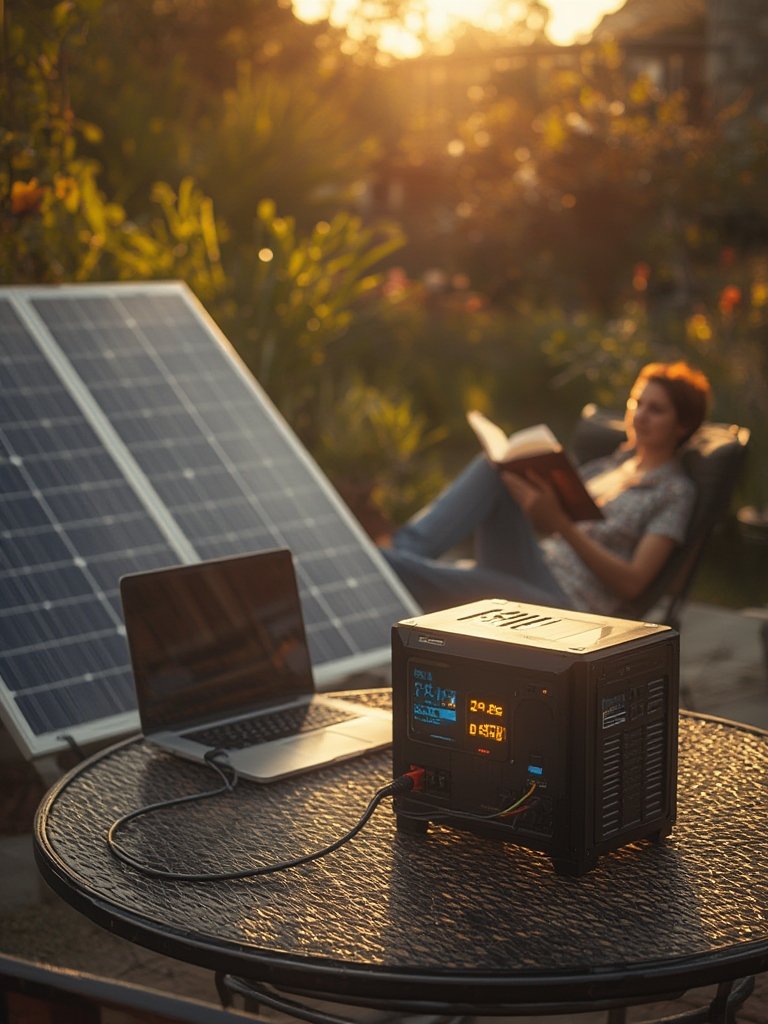
Building a modern DIY solar generator isn’t just about saving money—it’s flexibility, resilience, and energy independence on your terms. In 2024, up-to-date component prices and battery tech mean even first-timers can build reliable DIY power systems for home or travel. Just remember: the DIY solar generator you build is only as trustworthy as your planning and safety. Study component matching, label everything, and test carefully before relying on your system in a pinch.
Start your project today—review your real needs, pick proven components, and take small steps. Want to boost your entire home’s sustainability? Read up on rebate programs, or explore our tips on upgrading your household for a smarter, greener lifestyle.
FAQ
How much does it really cost to build a DIY solar generator in 2024?
For basic portable builds (500Wh–2000Wh), expect to spend $200–$2,000 total. Large home backup kits (3,000–10,000Wh) run $1,600–$5,400, depending on solar panel wattage, battery size, and quality of components. Most costs come from batteries and inverters.
What is the best battery type for a DIY solar generator?
Lithium iron phosphate (LiFePO4) batteries are the standard for DIY in 2024. They’re safer, lighter, and last far longer than old lead acid batteries. Expect to pay around $130 per kWh for DIY LiFePO4 cells, not including a required Battery Management System.
Can a DIY solar generator power a refrigerator or CPAP machine?
Yes, but be very careful sizing your system. You need a battery/inverter combination that can surge to at least 1,000–2,000W for a full-size fridge. For a CPAP, a smaller system will work; use a pure sine wave inverter for medical devices.
What’s the #1 mistake beginners make when building their first solar generator?
Skipping safety steps—specifically missing or undersizing fuses, using thin wires, or failing to install a correct BMS. Double-check every connection, and test for errors with a small load before adding expensive devices.
How does the ongoing cost compare to a store-bought generator?
DIY builds have lower ongoing costs, because you avoid annual maintenance contracts and can swap out batteries affordably. Commercial units may charge 1–2% per year for service—around $20–$600 on larger models. With DIY, you’re your own support team!